

Imagine pulling up to a 1930s party in a car that turns heads like no other. The 1937 Cord 810 does just that. This luxury ride from the Auburn Automobile Company blends speed, style, and smarts. It packs front-wheel drive and hidden headlights into a low-slung body. Car fans still whisper about its coffin nose grille. You feel the thrill of innovation every time you spot one.
The Cord 810 started as a dream to build a baby Duesenberg. Designer Gordon Buehrig sketched lines that screamed the future. Production kicked off in 1936, but the 1937 model added supercharged power. It hit roads amid the Great Depression. Buyers craved its fresh look, but troubles lurked under the hood.
Stats paint a clear picture. The U.S. Department of Commerce reports American car sales dropped 50% from 1929 to 1932 due to economic woes. Yet, the Cord 810 sold 1,174 units in its debut year, per Auburn records. Total output for 810/812 reached 2,972 cars, a small run that boosts its rarity today. The National Park Service notes over 75% of Duesenbergs survive, hinting at Cord’s solid build quality.
This guide dives deep. You learn the roots, the genius behind it, and tips to chase one down. Ready to roll back time?
The Roots: How Auburn Gave Birth to Cord Automobiles
Errett Lobban Cord took the wheel at Auburn in 1924. The Auburn Automobile Company, founded in 1900 in Auburn, Indiana, teetered on the edge. Cord, a sharp salesman and racer, turned it around fast. He pushed colorful paints and eight-cylinder engines. Sales jumped.
By 1926, Cord bought Duesenberg for high-end rides. He formed the Cord Corporation in 1929. This holding company wrapped up Lycoming Engines and more. Cord Automobiles emerged as the luxury arm. The L-29 in 1929 brought front-wheel drive to America first.
The Great Depression hit hard. Auburn shifted to kitchen cabinets for cash. But Cord dreamed big. He wanted a lower-cost Duesenberg rival. That spark led to the 810. Auburn, Indiana, buzzed with activity. Workers built bodies in a massive plant.
- Key Milestone: Cord’s buyout in 1925 saved Auburn from collapse.
- Expansion: By 1931, Auburn ranked 13th in U.S. sales.
- Challenge: Economic crash cut luxury demand, forcing bold moves.
This backdrop set the stage. Cord pushed for advanced design to stand out.
Design Magic: Gordon Buehrig’s Vision for the Cord 810
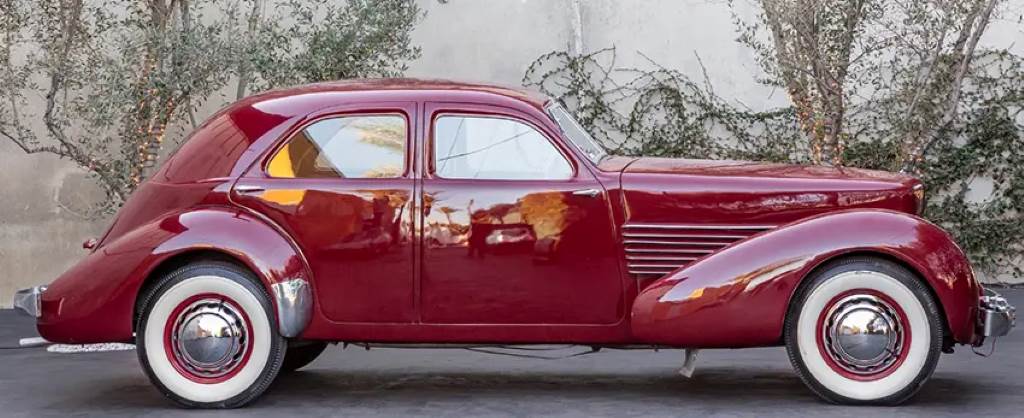
Gordon Buehrig shaped the Cord 810’s soul. Born in 1904, he apprenticed at Packard and Stutz. By 1935, he led Auburn’s styling team. Vince Gardner and Alex Tremulis helped craft the lines.
Buehrig aimed for sleek flow. He ditched tall grilles for a horizontal louvered one. That earned the coffin nose tag. The body sat low at 60 inches tall. Fender contours hugged the wheels. Wheel cover design matched for smooth looks.
Hidden headlights stole the show. Drivers cranked them up from the dash. These retractable headlamps used Stinson landing lights. Hideaway headlamps cut drag and boosted style. Door hinges hid inside for clean lines.
The greenhouse stayed low. No bulky roof spoiled the profile. Buehrig drew from aircraft panels. The dashboard gleamed with engine-turned aluminum. Edge-lit gauges glowed soft.
In 1951, the Museum of Modern Art picked the Cord 810 for its Eight Automobiles exhibit. American Heritage called it the single most beautiful American car in 1996. Buehrig’s work influenced Ford and Studebaker later.
- Inspiration: Le Corbusier’s architecture books sparked Buehrig’s clean forms.
- Team Effort: Gardner added pontoon fenders; Tremulis tweaked the dash.
- Legacy: Design awards rolled in, proving its timeless appeal.
Buehrig called it his favorite. You see why in every curve.
Engineering Marvels: What Made the 1937 Cord 810 Tick
The 1937 Cord 810 packed brains under its beauty. Front-wheel drive returned from the L-29. It ditched the driveshaft for better space. Independent front suspension smoothed rides. Trailing arms with leaf springs handled bumps.
Power came from a Lycoming V8. This 4.7-liter straight-eight made 125 hp at 3,600 rpm. Three main bearings kept it reliable. Stromberg carburetor fed fuel smooth.
Transmission shone bright. The Bendix electro-vacuum pre-selector offered semi-automatic shift. Drivers picked gears via column lever. Vacuum assisted the clutch. Four speeds plus overdrive meant easy cruising.
Unit-body construction welded frame to body. No separate chassis rattled. Unitized body construction cut weight. The de Dion layout at rear added stability.
Supercharged 812S models hit 195 hp. Chrome side exhausts snaked from the hood. Top speed touched 110 mph. That set a speed record for production cars then.
Vapor lock plagued early units. Hot engines boiled fuel in lines. Reliability issues slowed sales. But fixes came quick.
- Drive Layout: Transverse mount engine sat behind the front axle for balance.
- Brakes: Four-wheel drums with cooling holes in wheel covers.
- Firsts: Steering wheel horn rim and covered locking gas filler.
This mix pushed boundaries. It echoed the Citroën Traction Avant.
Debut Glory: The 1937 Cord 810 Steals the Spotlight
November 1935 brought the Cord 810 to the New York Auto Show. Crowds swarmed. People climbed nearby cars for views. Orders flooded in. Cord promised 1,000 units monthly.
The 1936 model launched as Westchester sedan at $2,175. Phaeton and convertible coupe followed. The 1937 refresh became the 812. Prices rose to $2,445 for sedans. Custom Beverly and Westchester added long-wheelbase options at $2,960.
Auto shows buzzed. The National Automobile Show in 1936 featured it front and center. Car enthusiasts raved. Production car status meant real-world appeal.
Hidden headlamps drew gasps. Retractable headlights popped via crank. Lamp assemblies blended into fenders. Styling details like rear-hinged hood added flair.
But delays hit. Transmissions lagged. First deliveries waited till April 1936. Unsold 810s rebadged as 812s.
- Show Impact: Over 100 prototypes rushed for display.
- Pricing Tiers: Sportsman coupe at $2,585; phaeton at $2,645.
- Buzz: Press called it a sensation, born from the highway.
The debut lit a fire. Yet flames flickered.
Tough Times: Challenges and the Short Life Span
The Great Depression crushed luxury sales. American cars struggled. The Cord 810 faced vapor lock and gear slips. Semi-automatic transmission needed tweaks.
E.L. Cord’s stock games drew heat. SEC probes forced sales. By August 1937, production stopped. Cord bailed to real estate.
Only 2,972 total 810/812 built. That short life span adds mystique. Reliability issues scared buyers. Vapor lock worsened in heat.
Financial woes bit deep. Auburn lacked cash for fixes. Competitors like Cadillac Series 60 priced close but sold steady.
Post-shutdown, bodies went to Hupp Skylark and Graham Hollywood. Limousine Body Company used dies too.
- Main Hurdles: Mechanical bugs and economic slump.
- End Result: Bankruptcy in 1937 closed Auburn, Cord, Duesenberg.
- Silver Lining: Rarity drives collector value today.
Trials cut deep. But the spark endured.
Lasting Echoes: The Cord 810’s Influence on Automotive History
The 1937 Cord 810 reshaped cars. Front-wheel drive waited 30 years for Oldsmobile Toronado revival. Cadillac Eldorado followed with transverse mount nods.
Hidden headlights inspired 1960s Corvettes. Coffin-nosed grille echoed in 1970s Toronados. Unit-body construction paved ways for modern builds.
Replicas popped up. 1964 Cord 8/10 used Corvair drivetrain. Later ones took Ford power. Jay Leno owns one; he calls it the coolest sedan.
Auburn Cord Duesenberg Automobile Museum in Auburn, Indiana, houses gems. Collection in Action events let you see them run.
Car enthusiasts gather at meets. Auto editors of Consumer Guide praise its boldness. Even films like “Gangster’s Boy” featured it.
- Modern Ties: Influences in Buick Riviera and Chrysler hoods.
- Cultural Nod: Jason Love novels star a Cord roadster.
- Value Today: Pristine examples fetch six figures.
Its path lives on.
Read Also:
- How Much Weight Can a Garage Door Opener Lift? Guide to Horsepower and Sizing
- Garage Door Headroom: Measurements and Minimum Clearance
- Is a Motorhome Right for You? Key Questions to Consider Before Deciding
Hunt Your Own Cord: Tips for Enthusiasts
Dream of owning a 1937 Cord 810? Start smart. Join the Auburn Cord Duesenberg Club. They host meets and part swaps.
Check Hemmings for listings. Focus on rust-free bodies. Reproduction body panels help restores. Santa Mike in Beverly Hills specializes in parts.
Drive one first. Rent via clubs. Test the semi-automatic shift. Watch for vapor lock fixes.
Budget for upkeep. Lycoming V8 parts come from specialists. Right-hand drive conversions exist for exports.
- Step 1: Visit the museum for inspiration.
- Step 2: Network at auto shows.
- Step 3: Inspect thoroughly; get expert eyes.
Own a piece of history. You join legends.
Conclusion
The 1937 Cord 810 blends bold design and smart engineering. Gordon Buehrig’s lines, E.L. Cord’s vision, and Auburn’s grit created magic. Front-wheel drive, hidden headlights, and unit-body construction set standards. Despite short life span and reliability issues, it influences rides today.
Ready to dive in? Visit the Auburn Cord Duesenberg Automobile Museum. See one up close. Your turn to chase that coffin nose thrill.
FAQs
What Made the 1937 Cord 810’s Design So Unique?
Gordon Buehrig crafted sleek lines with a coffin-nosed grille and low profile. Hidden headlights retracted into fenders via crank. Unit-body construction gave a smooth ride. These touches made it a standout in American cars.
Why Did the Cord 810 Use Front-Wheel Drive?
Front-wheel drive cut the driveshaft and transmission tunnel. It freed cabin space and lowered the stance. As the first U.S. production car with independent front suspension, it handled curves better than rivals.
How Many 1937 Cord 810 Models Were Produced?
Total 810/812 output hit 2,972 units. The 1937 812 added supercharged options. Low numbers stem from financial woes and mechanical tweaks during the Great Depression.
What Engine Powered the 1937 Cord 810?
A Lycoming V8 delivered 125 hp from 4.7 liters. Supercharged 812S versions boosted to 195 hp. Stromberg carburetor ensured smooth flow, though vapor lock posed early challenges.
Where Can I Learn More About Cord Automobiles History?
Head to the Auburn Cord Duesenberg Automobile Museum in Auburn, Indiana. It displays originals and hosts events. Books like “Cord Complete” by Josh Malks offer deep dives too.