

Picture yourself in your garage, ready to fix that nagging oil leak under your car. You slide smoothly beneath the vehicle without straining your back or scraping your knees. A car creeper makes this possible. This handy tool lets mechanics lie flat and roll under cars easily. It supports your body while you work on hard-to-reach spots.
Many people overlook safety in home workshops. According to the National Safety Council, about 16 out of 100 people suffered preventable injuries in home and community settings in 2023. Additionally, SafeWork SA reports that motor mechanics face high risks of muscular stress injuries to backs, shoulders, and knees from manual handling. However, using a car creeper reduces these dangers by improving access and minimizing awkward postures. Now, let’s explore how you set one up in your space.
Understanding What a Car Creeper Is
First, grasp the basics of this essential garage item. A car creeper acts as a low-profile rolling platform. You lie on it to access the underside of vehicles without crawling on cold, hard floors.
Mechanics have relied on creepers for decades. They feature wheels for smooth movement and padded surfaces for comfort. Some models fold for easy storage. Essentially, this tool turns a tough job into a manageable one.
Moreover, creepers come in various designs. Traditional ones use plastic or metal frames. Advanced versions include adjustable headrests. Understanding these options helps you pick what fits your needs.
Benefits of Having a Car Creeper in Your Workshop
Adding a creeper boosts your workshop efficiency right away. You move under cars quickly, saving time on repairs. This setup lets you focus on the task instead of discomfort.
Safety stands out as a key advantage. Creepers prevent slips and falls on oily floors. They also reduce strain on your joints during long sessions. As a result, you avoid common injuries that plague DIY enthusiasts.
Furthermore, this tool enhances precision in your work. Lying flat gives a clear view of components like exhaust systems or brakes. You spot issues that might hide otherwise. Overall, it transforms your garage into a professional space.
Productivity gets a lift too. With easy mobility, you switch positions without standing up repeatedly. This flow keeps projects moving forward. Plus, it encourages regular maintenance on your vehicles.
Finally, consider the long-term health perks. Regular use cuts down on back pain from bending over. Studies from safety organizations show tools like these lower injury rates in workshops. So, investing in one pays off in wellness.
Preparing Your Garage for the Creeper
Before assembly, clear your space properly. Remove clutter like old parts or tools from the floor. A clean area ensures safe rolling without obstacles.
Next, check the floor surface. Smooth concrete works best for creeper wheels. If your garage has cracks or uneven spots, fix them first. Sand down rough areas to prevent snags.
Additionally, organize storage spots. Designate a wall hook or shelf for the creeper when not in use. This keeps it accessible yet out of the way. Proper setup avoids trips and maintains order.
Lighting plays a crucial role too. Install bright LED lights overhead. Good visibility under the car prevents accidents. Pair this with a headlamp for detailed work.
Ventilation matters as well. Open doors or use fans to circulate air. Fumes from engines can build up quickly. Fresh air keeps you alert and healthy during sessions.
Lastly, gather necessary tools. You’ll need screwdrivers, wrenches, and perhaps pliers. Having everything ready speeds up the process. Preparation sets the stage for success.
Choosing the Right Car Creeper
Start by evaluating your workshop needs. Frequent users might prefer heavy-duty models. Casual DIYers can opt for lighter versions. Match the creeper to your usage level.
Look at frame materials next. Steel offers durability for tough jobs. Plastic provides lightweight portability. Each type suits different environments.
Consider wheel quality too. Larger casters roll better over debris. Swivel designs improve maneuverability. These features make navigation under cars effortless.
Headrest options add comfort. Adjustable ones support your neck during extended periods. Padded surfaces cushion your body. Comfort keeps you focused longer.
Storage features help in small garages. Foldable creepers save space. Some include tool trays for convenience. These extras streamline your workflow.
Finally, think about weight capacity. Ensure it handles your body size safely. Sturdy builds prevent collapses. Right choice leads to reliable performance.
Related:
Essential Garage Door Cleaning Tips
What is the Most Used Tool in the Garage?
Step-by-Step Guide to Assembling Your Car Creeper
Begin with unboxing the parts. Lay everything out on a clean surface. Check the manual for all components. This step avoids missing pieces later.
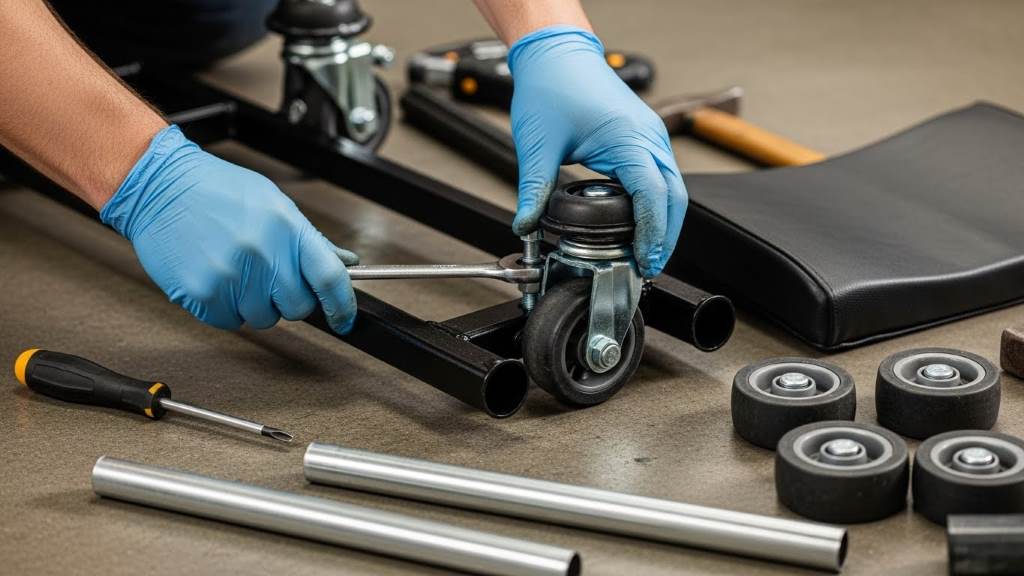
Attach the wheels first. Secure each caster to the frame base. Use provided bolts and tighten them firmly. Proper attachment ensures smooth rolling.
Connect the frame sections next. Align the main body with side rails. Insert pins or screws as directed. Double-check alignments to avoid wobbles.
Add the padding layer. Place the cushioned board on top. Fasten it with clips or Velcro strips. This creates a comfortable lying surface.
Install any accessories. Attach headrests or tool holders if included. Follow instructions precisely. Extras enhance functionality.
Test the assembly last. Roll it around gently. Lie down to check stability. Adjustments now prevent issues during use.
Installing and Positioning the Creeper in Your Garage
Position the creeper near your work area. Keep it close to the vehicle lift or jack stands. Easy access saves time when starting jobs.
Integrate it into your workflow. Roll it under the car after raising the vehicle safely. Always use jack stands for support. This setup promotes efficient repairs.
Store it properly between uses. Hang it on a wall rack. Or slide it under a workbench. Smart storage keeps your garage tidy.
Adjust for different vehicles. Higher cars might need ramps first. Position the creeper accordingly. Flexibility handles various projects.
Train family members if shared. Show them safe usage basics. Shared knowledge prevents mishaps. Everyone benefits from proper handling.
Monitor placement over time. Shift it as your workshop evolves. Regular reviews maintain optimal setup. Adaptability keeps things running smoothly.
Safety Tips When Using Your Car Creeper
Always inspect before use. Check wheels for damage. Look at the frame for cracks. Routine checks catch problems early.
Wear protective gear. Use gloves to grip tools better. Safety glasses shield your eyes. Proper attire reduces risks.
Secure the vehicle above. Employ reliable jack stands. Never rely on a jack alone. Stability prevents collapses.
Roll slowly under the car. Avoid sudden movements. Gentle actions maintain control. Patience ensures safety.
Keep the area clear. Remove loose items from the floor. Clutter causes accidents. Clean spaces support safe work.
Exit carefully after finishing. Push out feet first. Stand up slowly to avoid dizziness. Methodical exits prevent falls.
Maintenance and Care for Longevity
Clean the creeper regularly. Wipe down after each use. Remove oil and dirt buildup. Fresh surfaces last longer.
Lubricate moving parts. Apply grease to wheels monthly. Smooth operation extends life. Maintenance keeps it reliable.
Store in a dry spot. Moisture causes rust on metal parts. Covered areas protect it. Proper storage preserves condition.
Replace worn components. Swap out damaged wheels promptly. Fresh parts maintain performance. Upkeep avoids breakdowns.
Inspect padding for tears. Repair or replace as needed. Comfortable surfaces improve experience. Care ensures ongoing utility.
Schedule annual reviews. Examine the entire unit. Thorough checks spot hidden issues. Consistency prolongs usability.
Common Mistakes to Avoid
Don’t rush assembly. Take time to follow steps. Hasty work leads to instability. Patience yields better results.
Avoid overloading the creeper. Stick to weight limits. Excess strain causes failures. Respect capacities for safety.
Never use on uneven surfaces. Flat floors work best. Bumps hinder movement. Choose suitable areas always.
Skip ignoring the manual. Read instructions fully. Assumptions cause errors. Guidance provides accuracy.
Refrain from poor storage. Leaving it out invites damage. Protected spots safeguard it. Habits preserve quality.
Steer clear of neglecting cleaning. Dirt accumulates quickly. Regular care prevents wear. Diligence maintains appearance.
Conclusion
You now know the full process for setting up a car creeper in your garage. From understanding its role to assembly and safety, each step builds a better workshop. Benefits like reduced injury risks and improved efficiency make it worthwhile. Preparation and maintenance ensure lasting value.
Take action today. Assemble your creeper and tackle that next repair with confidence.
FAQs
What Makes a Car Creeper Essential for Home Mechanics?
Home mechanics benefit from creepers by gaining easy access under vehicles. This tool reduces physical strain and boosts safety. It allows precise work without floor discomfort.
How Do I Know If My Garage Floor Suits a Creeper?
Check for smoothness and evenness. Concrete or tiled floors work well. Fix any cracks to ensure safe rolling.
Can I Use a Car Creeper for Other Workshop Tasks?
Yes, creepers help with tasks like floor cleaning or low-shelf access. Their versatility extends beyond car repairs. Adapt them to various needs.
What Should I Do If the Creeper Wheels Stick?
Clean and lubricate them first. Inspect for debris. Replace if damaged for smooth performance.
How Often Should I Inspect My Car Creeper?
Perform checks before each use. Do thorough reviews monthly. Regular attention catches issues early.
References